If you’re in the market for a diamond – whether it’s for an engagement ring, an anniversary gift, or perhaps just a personal investment – you’ll probably run into questions about the 4Cs of diamonds.
Originally developed by GIA founder Robert Shipley in the 1940s, cut, color, clarity, and carat are the universal standards for assessing a diamond’s true quality and value range.
As Baltimore’s trusted diamond experts for over 100 years, our team works with buyers and sellers to help them learn how to evaluate and select the perfect diamond.
Let’s break down each of these important characteristics so you can shop with confidence and find the perfect diamond for your needs and budget.
What is Diamond Cut?
Of all the 4Cs, cut has the most significant impact on a diamond’s beauty and brilliance. But contrary to popular belief, cut doesn’t mean the diamond’s shape (such as round, princess, emerald, etc).
It’s actually related to how well the diamond has been cut and polished from its rough state.
A well-cut diamond will interact with light in a way that maximizes three optical effects:
- Brilliance: The total light reflected from a diamond
- Fire: The dispersion of light into the colors of the spectrum
- Scintillation: The flashes of light and dark, or sparkle, when a diamond moves
Different Diamond Cuts and Their Grading
The Gemological Institute of America (GIA) grades diamond cut quality on a scale from Excellent to Poor. When you’re evaluating the cut of a diamond, each cut is assessed based on:
- Proportions and symmetry
- Polish quality
- How the facets interact with light
What are the Most Popular Diamond Cuts?
While “cut” technically refers to quality, you may still find that people and pop culture refer to a diamond’s cut as the diamond’s shape or style. Here are some of the most popular cuts of diamonds:
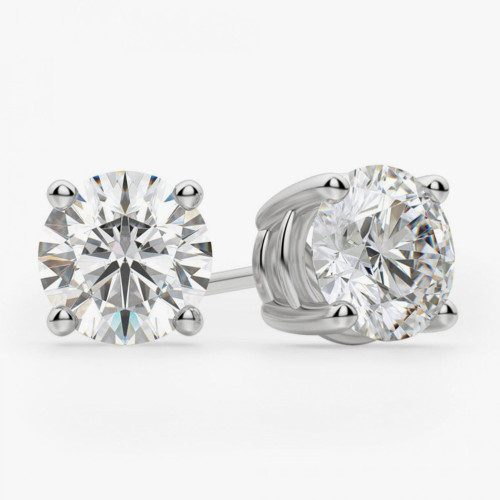
- Round Brilliant: The most popular and classic diamond shape, designed to maximize brilliance
- Princess: Square or rectangular with pointed corners
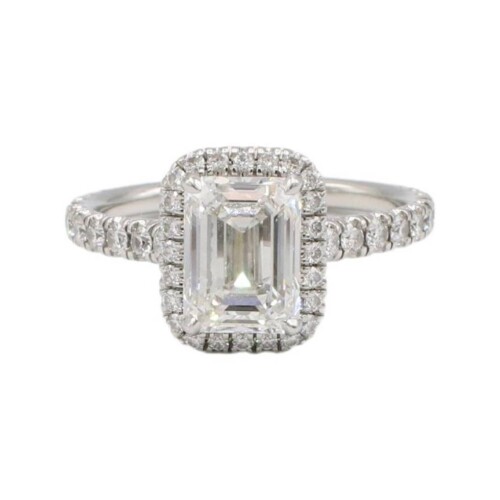
- Emerald: Rectangular with trimmed corners and step-cut facets
- Cushion: Square or rectangular with rounded corners
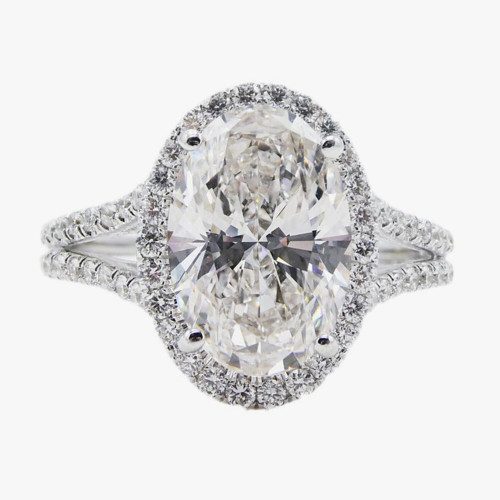
- Oval: An elongated round brilliant that can make fingers appear slimmer
- Marquise: Elongated with pointed ends
- Pear: Teardrop shape combining round and marquise cuts
- Radiant: Square or rectangular with trimmed corners and brilliant-cut facets
- Asscher: Square emerald cut with larger step facets
- Heart: Symbolizing love and romance
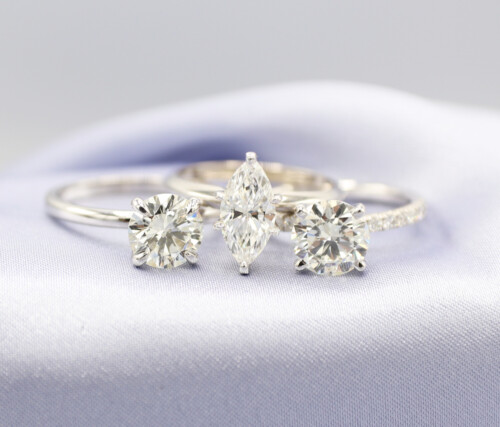
Each of these cuts has unique characteristics – but remember, the “best” cut really depends on your personal preferences and the qualities that you (or those who might receive it) value most in a diamond.
What is Diamond Color?
Like “cut”, a diamond’s color isn’t always what we think. When we talk about diamond color, we’re actually referring to the absence of color.
The most valuable diamonds are those that are completely colorless, because they allow more light to pass through, creating more brilliance and fire.
The GIA color scale ranges from D (colorless) to Z (light yellow or brown):
- D, E, F: Colorless diamonds
- G, H, I, J: Near-colorless diamonds
- K, L, M: Faint yellow diamonds
- N-Z: Very light to light yellow diamonds
What Is the Best Diamond Color?
While D-color diamonds are the highest grade and most valuable, they also command the highest prices. For most buyers, the ideal diamond color falls in the G-J range, as these offer the most excellent value with no visible color to the untrained eye, especially when set in yellow or rose gold.
What is Diamond Clarity?
If color refers to the absence of color, clarity refers to the absence of inclusions (internal flaws) and blemishes (surface flaws) in a diamond. These naturally occurring features can affect a diamond’s brilliance and value.
This is where you’ll often find a lot of letters included in a diamond’s ID – such as VVS1 or VS2.
The GIA clarity scale is as follows:
- FL (Flawless): No inclusions or blemishes visible under 10x magnification
- IF (Internally Flawless): No inclusions visible under 10x magnification
- VVS1, VVS2 (Very, Very Slightly Included): Inclusions so slight they’re difficult for a skilled grader to see
- VS1, VS2 (Very Slightly Included): Minor inclusions that are somewhat difficult to see
- SI1, SI2 (Slightly Included): Noticeable inclusions visible under 10x magnification
- I1, I2, I3 (Included): Obvious inclusions visible to the naked eye
What Is Good Clarity for a Diamond?
Many of our customers ask, “What is the best clarity for a diamond?” While FL and IF diamonds are of the highest quality, they’re also quite rare and expensive.
For most buyers, VS1-SI1 offers the best value. They still appear eye-clean (no visible inclusions to the naked eye) while being more affordable as they aren’t the most highly sought-after grades.
What is Diamond Carat?
Like gold, many believe that carats are the determining factor of a diamond. However, this is not entirely true. Carat refers to the weight of a diamond and not its size or appearance.
One carat equals 200 milligrams (0.2 grams). While carat weight can have a big impact on a diamond’s price, two diamonds of equal carat weight can have very different values depending on the other three Cs.
What does carat mean in diamonds in terms of actual size? Here’s a quick reference for round brilliant diamonds:
- 0.25 carat: approximately 4.1mm diameter
- 0.50 carat: approximately 5.1mm diameter
- 0.75 carat: approximately 5.9mm diameter
- 1.00 carat: approximately 6.5mm diameter
- 1.50 carat: approximately 7.4mm diameter
- 2.00 carat: approximately 8.1mm diameter
What is the Carat Weight Sweet Spot?
Diamond prices jump significantly at whole and half-carat weights. For example, a 0.95-carat diamond may cost notably less than a 1.00-carat diamond of the same quality, yet the size difference is imperceptible to the naked eye.
Breaking Down the Diamond Identification Code
When put together, each of the four Cs of diamond quality – carat, cut, color, and clarity – provide a unique identification code for each individual stone. So, while shopping, you may find a particular diamond graded as:
1.20 carats, Ideal cut, E color, and VS2 clarity
or
1.20 carats, Good cut, H color, and SI1 clarity
These give you a rundown of the four most important qualities to look for when buying a diamond. Knowing the scales can help, but working with a trusted diamond expert can make sure you know exactly what you’re getting.
Find Your Perfect Diamond at Samuelson’s
At Samuelson’s Diamonds, we believe that education is the first step in finding your perfect diamond. Our expert gemologists can guide you through the 4Cs and help you learn what matters most to you – and how to find the best diamond within your budget. We are committed to providing the best quality diamonds at fair prices.
Whether you’re shopping for an engagement ring or looking to invest in a diamond, understanding the 4Cs will help you make a confident, informed decision.
Contact us today to schedule your private appointment at our Baltimore, Chevy Chase, or Northern Virginia locations.